Steven Hardman, CEO, Conrad Energy
First published in CoStar on 5th April 2024
It is no secret that in recent years, energy security and indeed energy costs have become a matter of high concern for businesses. Building owners, operators, and managers have by no means been exempt, and many have considered what alternative options for energy supply can alleviate some of the strains that they have experienced.
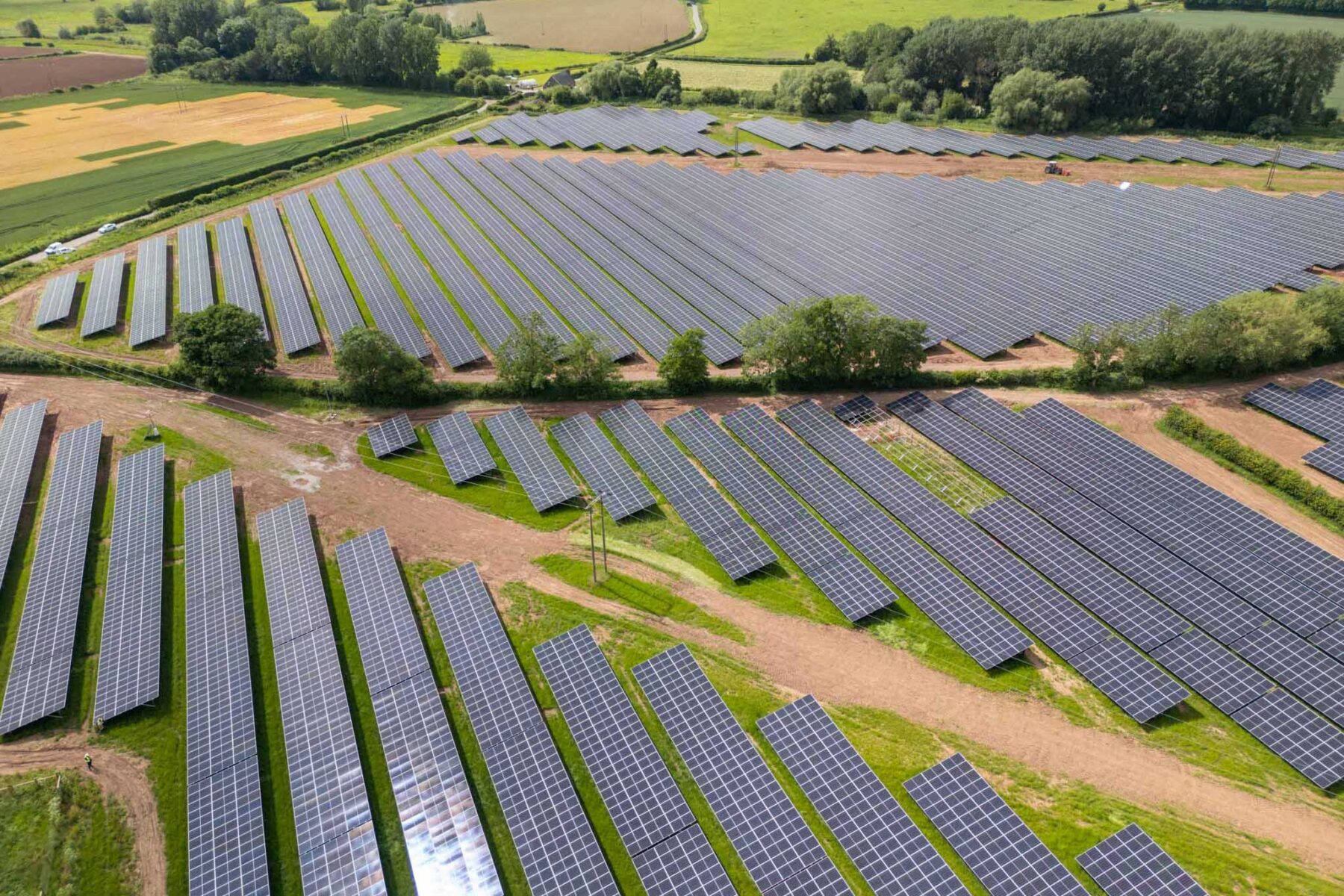
One such option that many may not be aware of is ‘behind the meter’ energy. This is energy generated on- or near- the business premises, which bypasses traditional energy supply routes, whether that’s via a rooftop solar array, a solar farm or several wind turbines located nearby and connected by a private wire.
A behind the meter approach to energy usage is adaptable to a wide variety of sites and operations, and it offers equally wide-ranging benefits. The advantages for energy-intensive sites, such as data centres or manufacturing facilities, are especially notable.
Cost savings
Servicing a key concern for all businesses and properties, behind the meter energy can lead to long-term cost savings. The considerably reduced cost of energy generated on-site over time outweighs the upfront investment costs and provides generous savings in comparison to the cost of relying entirely on traditional grid energy.
These low costs are combined with the further benefit of having greater cost certainty. Energy generated onsite is either free or, where the upfront capex costs were paid by an energy provider, are set at a long-term fixed price. That fixed rate is generally substantially lower than the market price as it doesn’t include the same level of standing charges which can account for as much as 30% of bills.
On-site generation can also incorporate energy management systems which ensures only the cheapest and best energy is being used at any given time. This provides valuable predictability regarding operating costs, enabling businesses to use their energy effectively and efficiently. Again, this compares favourably to using grid energy which is susceptible to market-wide volatility and price spikes. By reducing or removing reliance on local grids to power their assets, businesses can side step these risks.
Beyond just reducing energy costs, businesses can even look to leverage behind the meter energy to generate additional gains out of their property assets, as surplus energy can be sold back to the grid. In some cases, this can also be combined with maximising available tax reliefs for properties which are investing in renewable energy.
Moving away from the local grid
Local grids, whilst an integral part of the UK’s energy network, can present some notable challenges. They are vulnerable to extreme weather, cyber-attacks, and hardware breakdowns – all potentially leading to significantly disruptive outages. Reducing dependence on the local grid not only brings day-to-day convenience but is also a strategic imperative needed to maintain business resilience.
Behind the meter energy provides this much-needed security for properties and a means to combat the risks of grid malfunctions. Companies can save surplus energy generated during a time of low usage using battery storage systems to then use at a later date when demand is higher, or grid supply is not forthcoming.
Furthermore, if fewer properties depended on local or national grids, the wider stability of our energy infrastructure would also benefit – the strain on the grid would be lessened, and in turn so would the requirements for costly upgrade projects. Such a let-off is urgently needed, as the existing grid infrastructure is being stretched to its limits, particularly in cities and centres of growing populations.
Sustainability concerns
Sustainability is an ever-growing concern for both businesses and customers, and industries historically reliant on energy intensive buildings, for example hospitals or factories, are looking to leverage as many options to reduce their emissions as possible. Behind the meter energy can align with these ambitions, making the most of clean, renewable energy sources to minimise a property’s greenhouse gas emissions and reduce its carbon footprint.
Not only can this bolster a business’ green credentials in line with customers’ changing expectations, but it can also add value to the asset itself. Investors, too, have increasing appetite to expand their portfolio of more sustainable assets, and installing near or on-site sustainable energy sources to power a property is a demonstrable way to attach the sustainability value-add.
Getting behind ‘behind the meter energy’
There is no single, all-encompassing solution for setting up near or on-site energy generation – with the best fitting approach varying across property types and industries, energy requirements, and sustainability targets. All of this will feed into what scale of generation to pursue, and via which renewable means. Fortunately, this means properties can design a course of action that is specific to them.
A successful transition to behind the meter energy, should, however, be data-led.
Using robust figures on data usage and costs, businesses can then map out a tailored behind the meter energy generation strategy.
A thorough assessment of financial constraints is also necessary to undertake early in the planning process. Key budgetary points to weigh up are comparing the initial capex outlay and the ongoing maintenance costs required with the potential savings and revenue sources expected. Calculating likely ROIs and cash flow predictions will help properties make well-informed decisions and assess feasibility.
One way to tackle the potentially daunting financial aspect of setting up on-site generation is through Power Purchase Agreements, whereby an installer will cover the upfront costs and on-going operations and maintenance, and the price of the energy generated is then agreed at a fixed rate. This can save the property owner money and time, and guarantees stability of price without the need to invest substantial funds that can be better used elsewhere.
Businesses should also familiarise themselves with local regulations and policies to see what support is available for pursuing on-site energy generation. With net zero targets becoming increasingly important to councils, some offer rewards for companies utilising renewable energy generation and storage.
Overall, behind the meter energy offers wide-ranging benefits for properties, including stability, cost savings, sustainability, and self-sufficiency. What’s more, these benefits extend to wider local, and even national, considerations – reducing strain on the UK’s grid and improving the usage experience for all those more widely dependent on this infrastructure.