The Global Pledge on Renewables and Energy Efficiency was formalized at COP28, and was supported by previously agreed New Delhi Leaders Declaration and Sunnylands Statement. This was amidst the International Renewable Energy Agency’s World Energy Transitions Outlook 2023 which stressed the need for ~1,000 GW of renewable energy (i.e., energy obtained from natural sources such as solar, wind, geothermal, hydropower, ocean, and bioenergy) annually, to triple renewables power capacity to 11,000 GW by 2030 – envisioned as a key step in reducing global carbon emissions.
The inter-connection between renewable energy, maintenance of ecological balance, and social and economic development of communities is well documented. Nonetheless, the UN Sustainable Development Goal 7 (SDG7) is struggling to “ensure access to clean and affordable energy for all by 2030”. To take decisive steps towards stepping up renewables-based energy transition globally, the United Nations General Assembly has adopted a resolution designating January 26 as The International Day of Clean Energy.
To play its role in supporting this global agenda and the UK government’s Roadmap to Net Zero, alongside its existing portfolio of gas-fuelled flexible generation engines, Conrad Energy has been increasing the amount of renewable energy it generates to help achieve decarbonization, investing in technology to store energy produced by renewables, building a growing green hydrogen pipeline, and strengthening its renewable portfolio with its first acquisition of an onshore wind farm. More importantly, working closely with key stakeholders and partners, it is also investigating the potential beneficial relationship between its renewable energy initiatives and the incorporation of nature-based solutions (NbS) at select sites (see case study).
NbS is an umbrella term for interventions that can provide biodiversity, ecosystem, and social benefits, and have the potential to support >35% of mitigation strategies needed to achieve the Paris Agreement Targets by 2030. Well-planned NbS have been shown to complement a wide range of ecosystem services at different spatial levels. Further, implementing renewable energy, (e.g., solar photovoltaic) initiatives with NbS, (e.g., wetlands and gardens) has the potential to deliver beneficial environmental returns. With policies such as the Biodiversity Net Gain (BNG) gaining momentum, NbS could play an important role in supporting companies achieve their biodiversity commitments within their establishments.
However, it is important to acknowledge that despite the potential benefits, the NbS market (projected to generate US$800 billion by 2050) needs significant growth. Limited access to reliable data, limited understanding of, and adherence to, standards and methodologies, harmful policies, and lack of collaboration between sectors are some of the challenges that need to be addressed as we move ahead.
Nonetheless, renewable energy initiatives supported by NbS could present possibilities towards offsetting emissions. For companies which are willing to innovate and adapt, this relationship warrants exploration, and could provide opportunities to reap short-, mid-, and long-term rewards, (e.g., risk mitigation, talent attraction, financial benefits, and reduced carbon emissions).
If you would like to discuss anything in this article or find out how your company can help reduce its carbon footprint whilst at the same time improving biodiversity, please feel free to get in touch.
Case study
Renewable energy and biodiversity enhancement at the Larport Solar Farm site through a collaborative and sustainable approach.
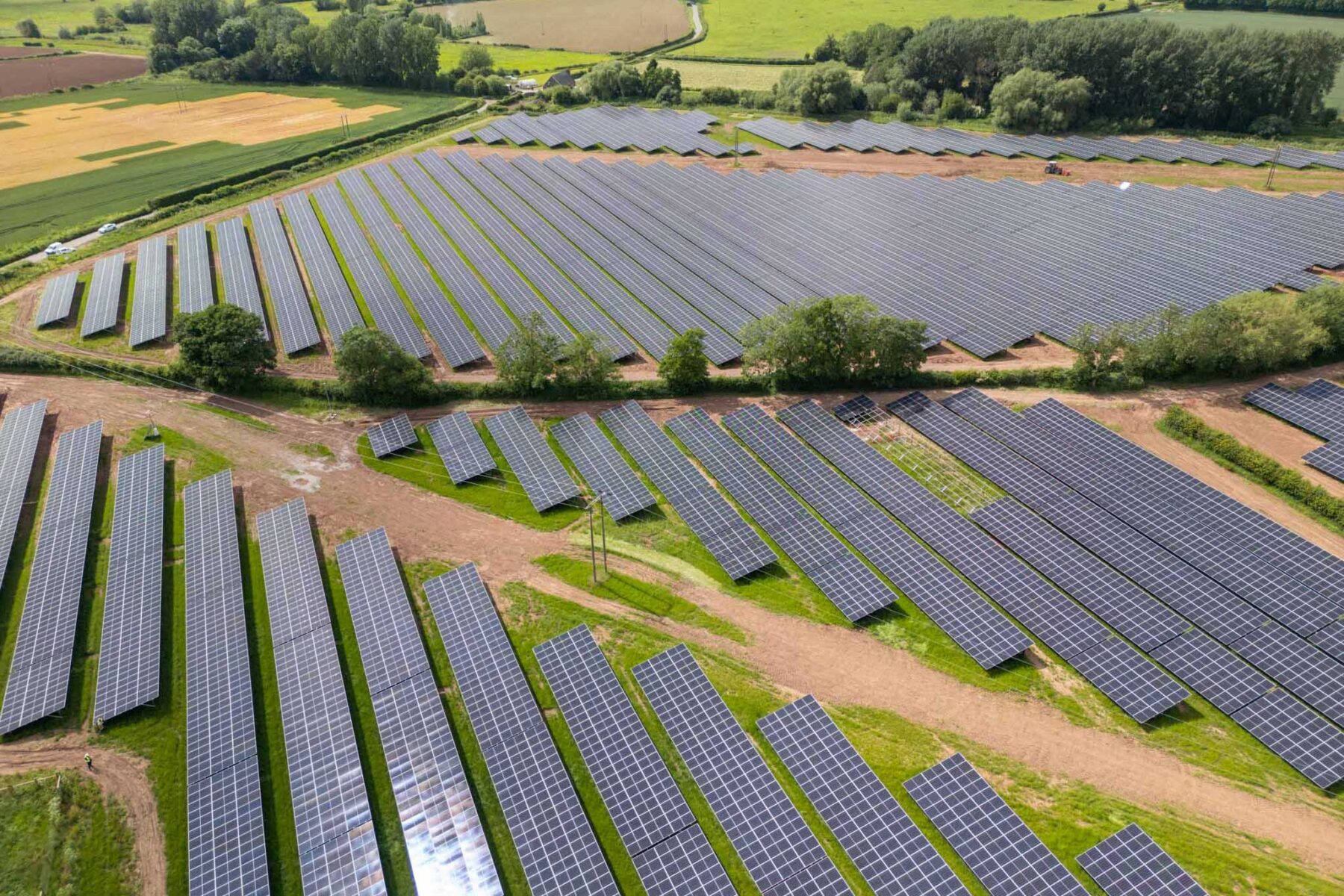
Conrad Energy’s solar farm at Larport in Herefordshire is expected to deliver over 40,000 MWh of renewable electricity annually saving >9,000 tonnes of CO2.
The Woodland Trust estimates that only ~7,000 wild black poplar trees now grow in Britain. According to the Forestry Commission, it is the most endangered native timber tree in Britain. There are 120 of these trees left in Herefordshire.
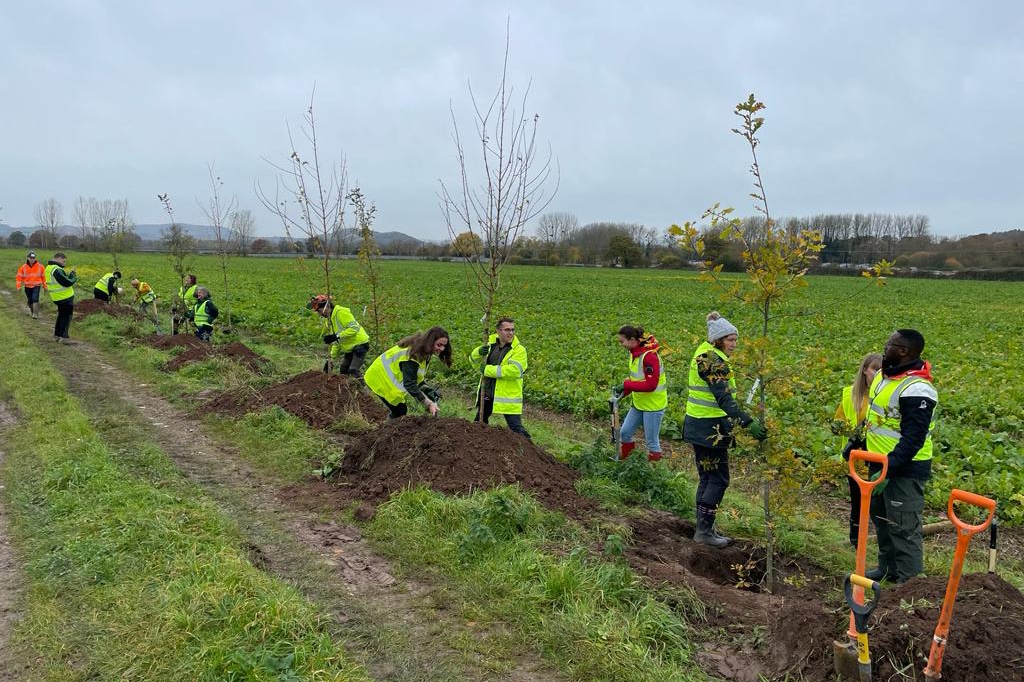
Supported by some key biodiversity enhancement strategies, (i.e., creation of a natural grassland and wildflower meadow, and installing bird and bat boxes and hedgehog houses) and the involvement of key stakeholders, Conrad Energy also undertook a tree-planting drive at the Larport solar farm site including 10 native black poplars, sourced from the Herefordshire Wildlife Trust.
Along with enhancing endangered species protection, the project is expected to deliver significant Biodiversity Net Gain and renewable energy over the course of its 40-year lifespan.
For more information, view our LinkedIn post.